Plumbing leaks inside walls
Slow leaks under tubs, behind toilets, or at supply lines can keep framing damp for weeks before a stain appears. Inspections focus on moisture patterns, not just visible spotting.
Serving Raleigh, North Carolina & surrounding areas
Mon–Fri 8am–6pm · Sat 9am–2pm
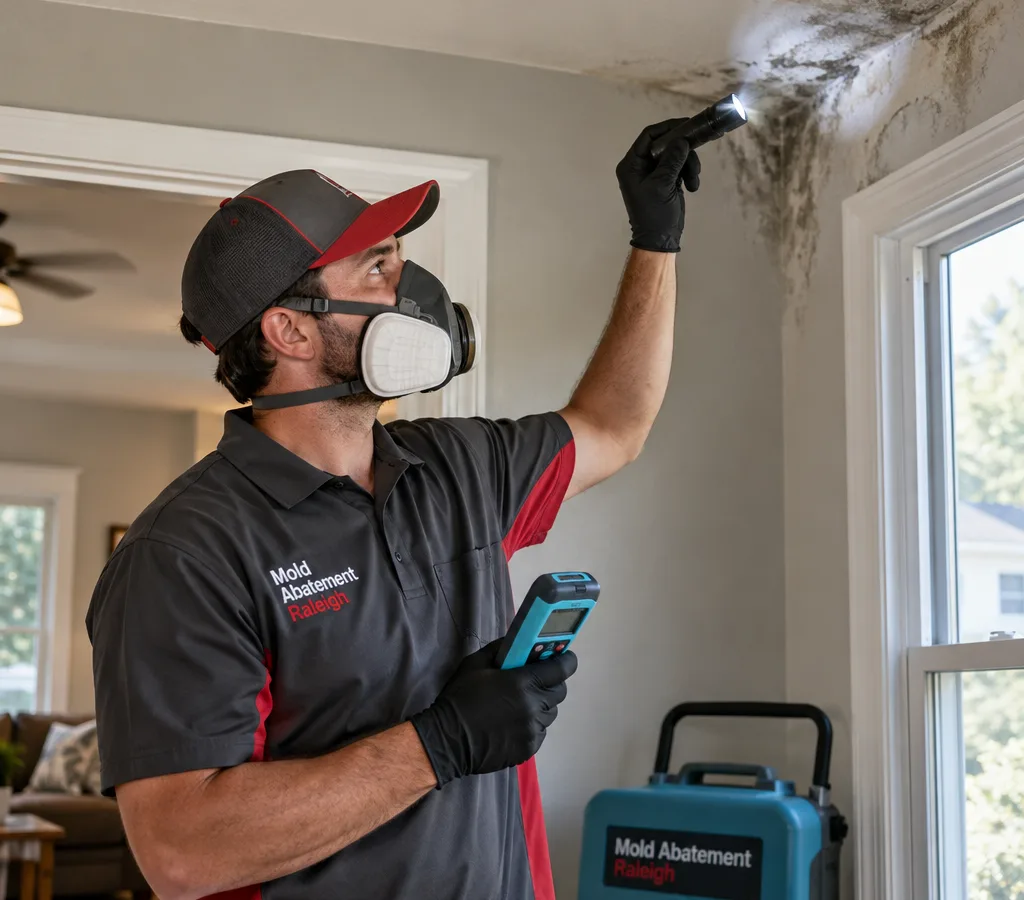
Mold inspection in Raleigh, NC
On-site assessments for homes and rentals with moisture or musty odors, with a clear written report and practical next steps.
A useful inspection connects visible conditions, moisture patterns, accessible areas, and clear documentation in one coordinated assessment.
Evidence before assumptions
A proper mold inspection is about evidence, not assumptions. If you are dealing with a persistent musty smell, recent water intrusion, staining on drywall, or allergy-like symptoms that seem tied to the house, the goal is to find where moisture is feeding growth and how far it extends.
Mold Abatement Raleigh performs mold inspection Raleigh homeowners and property managers can use to make decisions: where the problem is likely coming from, what areas should be opened up (if any), and what the next step should be. During an inspection we look for visible growth, conditions that support growth, and hidden moisture patterns that often show up around windows, plumbing runs, crawlspaces, and HVAC returns.
Our inspectors work the Raleigh market daily, and the local housing mix matters. In neighborhoods with older housing stock like Five Points, we often see long-term, low-grade moisture issues behind plaster or in older additions. In North Hills and other areas with newer remodels, problems are more likely tied to a missed flashing detail or a small plumbing leak that stayed unnoticed inside a wall. In Brier Creek and other newer subdivisions, tight building envelopes can make ventilation and humidity control more important after a water event.
If you want a team that stays focused on the inspection itself and explains what the findings mean, you are in the right place. Our crew is part of Raleigh's mold abatement specialists, and we treat inspections as the first step to a clean, defensible plan.
Methodical field checks
A thorough inspection is a combination of building-science basics and practical field checks. You should expect a methodical walk-through, targeted moisture checks, and documentation you can hand to a landlord, buyer, seller, or contractor.
Typical inspection components:
When sampling is appropriate, we explain what it can and cannot tell you. Air sampling can help compare an indoor area to outdoors or to another room, but it does not replace moisture source identification. Surface or tape lifts can help document what is on a specific material. We only recommend sampling when it helps answer a decision you actually need to make.
You will receive a written summary that prioritizes the moisture source, likely affected materials, and a practical path forward: monitoring, minor repairs, or remediation scope.
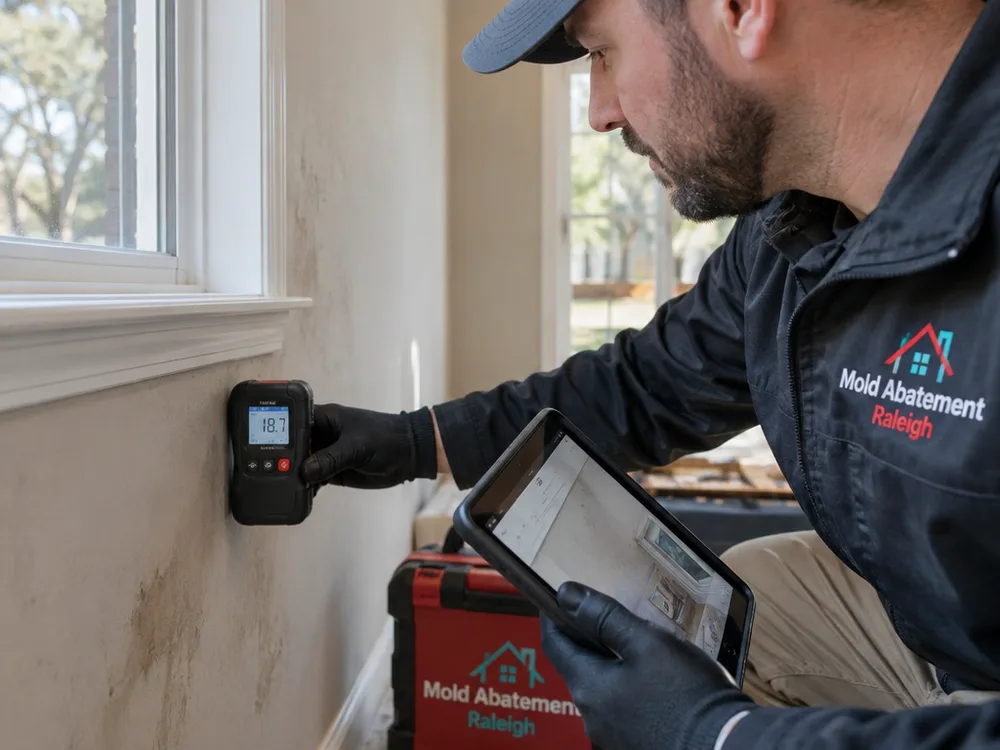
Find the moisture driver
Slow leaks under tubs, behind toilets, or at supply lines can keep framing damp for weeks before a stain appears. Inspections focus on moisture patterns, not just visible spotting.
Many Raleigh-area homes have vented crawlspaces. When humidity stays high, wood members and insulation can support growth even without a dramatic leak.
A small roof leak or poor flashing around chimneys and penetrations can wet sheathing and framing in an attic. A mold smell on the top floor often points up.
Water that gets past a window or trim detail can travel and show up away from the entry point. Moisture mapping helps track the route.
Foggy mirrors that linger, peeling paint, or recurring mildew can mean the exhaust fan is undersized, vented incorrectly, or not used long enough to clear humidity.
From concerns to clear guidance
We confirm the concerns you have noticed—odor, staining, or a recent water event—and ask where access is available so the visit stays efficient.
We walk the home, check likely sources, and use moisture meters to identify suspect building materials and hidden damp zones.
If sampling will answer a specific question, we collect it correctly and document exact locations so results are meaningful.
You get a clear summary of findings, photo documentation, and recommendations that separate immediate actions from longer-term prevention.
Planning the inspection
Mold inspection in Raleigh typically ranges from about $250 to $650, depending on home size, accessibility—including crawlspace and attic access—and whether sampling is needed. A basic visual inspection with moisture readings is usually at the lower end, while larger homes or inspections with multiple samples run higher.
Final price depends on how many areas need testing, how much moisture mapping is required, and whether conditions call for follow-up documentation. The exact cost is confirmed at the on-site inspection after we see the layout and concerns.
Decision-ready documentation
A good inspection report should help you make a decision the same week, not leave you with more questions.
Book Your Free InspectionWe write findings in plain language and keep the focus on what matters: where moisture is coming from, which materials may be affected, and what a reasonable scope looks like.
If you are in a real estate timeline, we can prioritize documentation so you can respond to an inspection objection or negotiate repairs with clearer information. If you are a landlord or property manager, we can also recommend practical steps to reduce recurrence after the immediate issue is handled.
Straight answers
Learn what an inspection covers, when testing is useful, and how to prepare for the visit.
Scheduling depends on current demand, but many inspections can be set within a few days, and urgent moisture situations are prioritized when possible. If you have an active leak or recent water intrusion, share that up front so we can plan the visit and focus on the most time-sensitive areas first.
An inspection with moisture mapping is often enough to identify the likely source and what materials are at risk, and testing is added when it changes a decision. Testing can help document conditions for a buyer or landlord, compare one room to another, or confirm what is on a specific surface, but it does not replace fixing the moisture problem.
Yes, when safe access is available, because crawlspaces and attic spaces are common places for hidden moisture and growth to develop. If an access point is blocked or conditions are unsafe, we document what could not be accessed and explain how that limits conclusions.
We can often identify a strong likelihood using moisture readings, thermal patterns, odor tracing, and the history of the water event, but opening the wall is the only way to confirm visually. When opening is warranted, we note the smallest, most strategic area to verify conditions and avoid unnecessary demolition.
Leave any suspect areas as-is, and avoid spraying bleach or cleaning products right before the visit, since that can hide evidence and affect sampling. If possible, clear a path to the areas of concern—under sinks, around the water heater, the crawlspace door, and attic access—so we can complete the inspection efficiently.
Yes, the report includes next-step guidance based on what we observe, including moisture source control, which materials may need removal, and containment considerations. If remediation is required, the inspection findings help define a clear scope so work is based on conditions, not guesswork.
Tell us what you are seeing or smelling and when the moisture issue started. We will confirm the right type of inspection, show up prepared, and deliver a clear report you can act on.