Musty odors that keep coming back
Persistent odor often points to damp building materials in a wall cavity, attic area, or crawl space. Remediation starts by finding where moisture is feeding growth.
Serving Raleigh, North Carolina & surrounding areas
Mon–Fri 8am–6pm · Sat 9am–2pm
Mold remediation in Raleigh, NC
Get a clear plan to stop mold at the source, clean it safely, and restore the affected areas with documented, professional work.
Inspection, moisture control, containment, removal, detailed cleaning, and documented verification belong in one coordinated plan.
Control the source and the spread
If you are searching for mold remediation Raleigh NC, the fastest way to make progress is to treat this as two problems at once: the mold you can see and the moisture that allowed it to grow. Mold Abatement Raleigh handles the full scope, including inspection, containment, removal of affected materials when needed, detailed cleaning, and a practical plan for preventing it from returning.
Raleigh homes often deal with humidity and moisture events that happen fast: HVAC condensate issues, slow plumbing leaks under sinks, a roof leak that shows up after a storm, or a damp crawl space that feeds musty air into the living area. Mold can also spread behind drywall and inside insulation where you cannot confirm conditions by sight alone. That is why we start with an on-site assessment and explain what is affected, what is not, and what the safest next steps are.
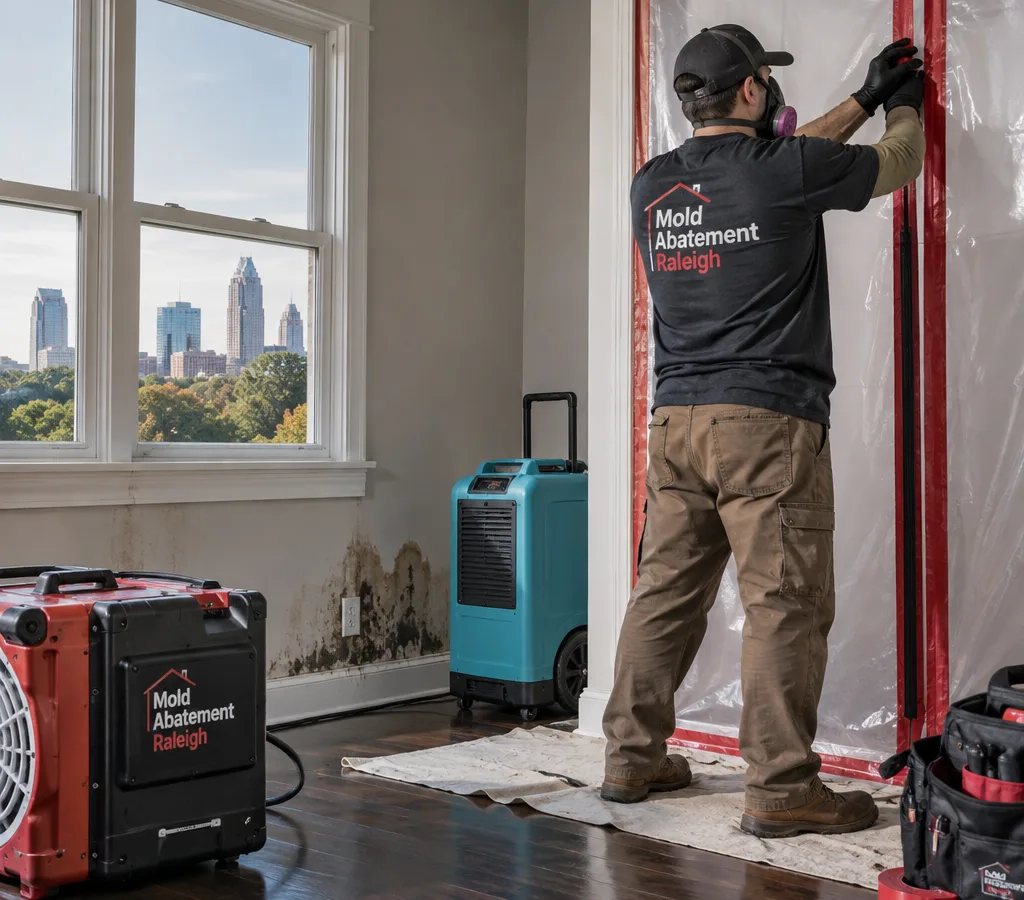
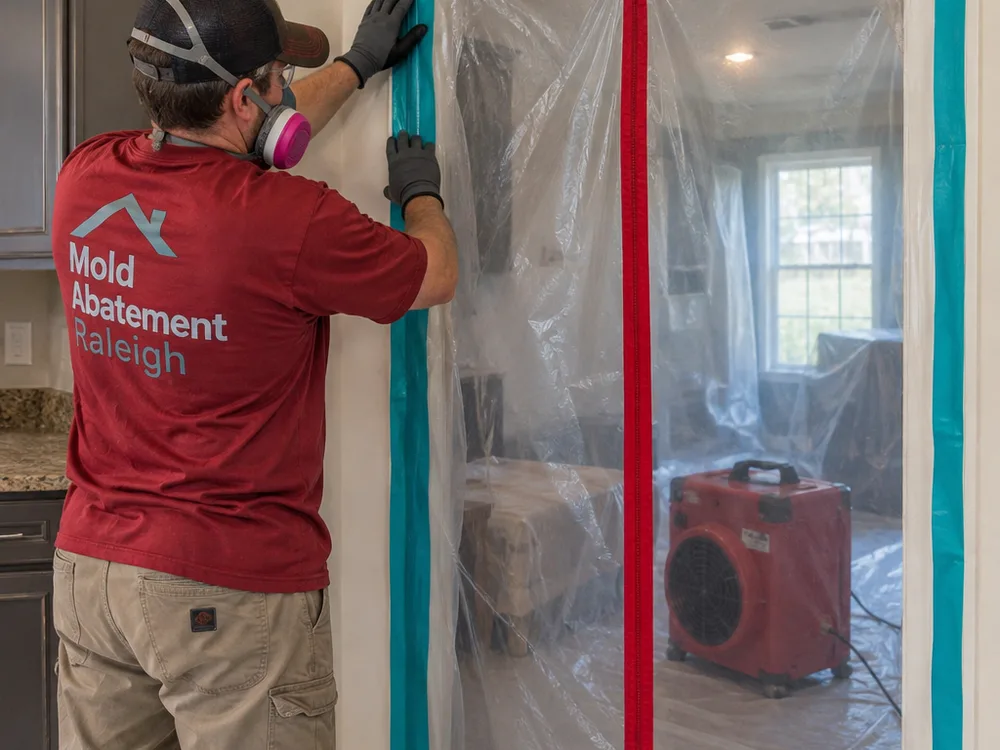
Our work as a professional mold abatement company in Raleigh is built around controlled removal and careful cleanup. We use standard remediation practices like isolating the work area (containment), maintaining negative pressure when appropriate, and running HEPA filtration to reduce cross-contamination. You get a written scope of work and clear expectations before remediation begins.
A complete remediation scope
Proper mold remediation is more than wiping surfaces and spraying a fragrance. A good plan focuses on where mold is growing, how far it has spread, and what materials can be cleaned versus removed.
Typical mold remediation Raleigh projects include:
If a contractor proposes remediation without addressing moisture, or wants to treat a suspected hidden area without opening it enough to confirm conditions, the results are hard to trust. We will explain the tradeoffs and the safest path based on what we can verify on-site.
Know when to investigate
Persistent odor often points to damp building materials in a wall cavity, attic area, or crawl space. Remediation starts by finding where moisture is feeding growth.
After a leak or overflow, materials can stay wet behind baseboards, under flooring, or inside insulation. If drying was incomplete, mold can appear weeks later.
Surface growth can be the tip of a larger affected area. The right next step is an inspection that confirms what is superficial and what is not.
Moist air from below can raise indoor humidity and create recurring problems. Remediation focuses on cleaning impacted framing and correcting moisture conditions.
If someone in the home is sensitive to airborne irritants, containment and HEPA filtration matter even more. We plan the job to reduce exposure during cleanup.
From assessment to verification
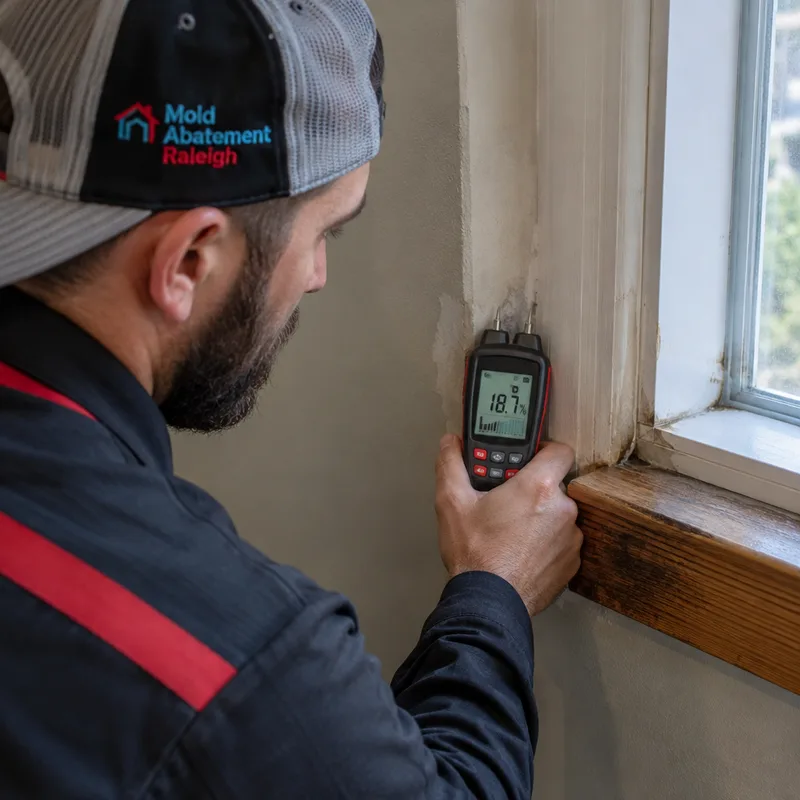
We assess the affected areas, look for likely moisture sources, and discuss what you have noticed. If conditions suggest hidden impact, we explain what needs to be opened or tested to confirm it.
Before disturbing affected materials, we isolate the work zone and set up HEPA air filtration. This helps keep spores and dust from spreading into the rest of the home.
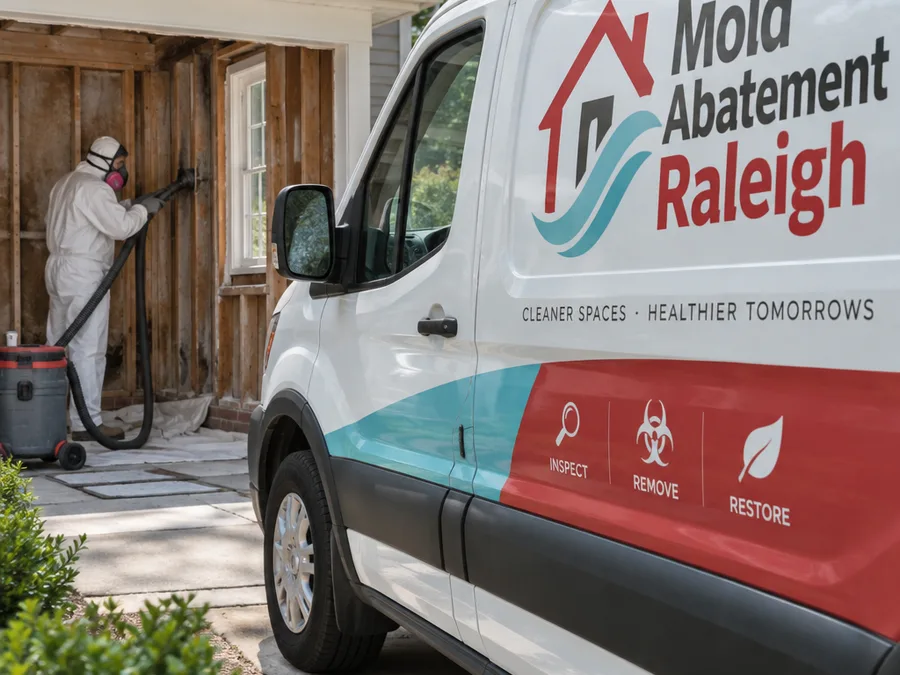
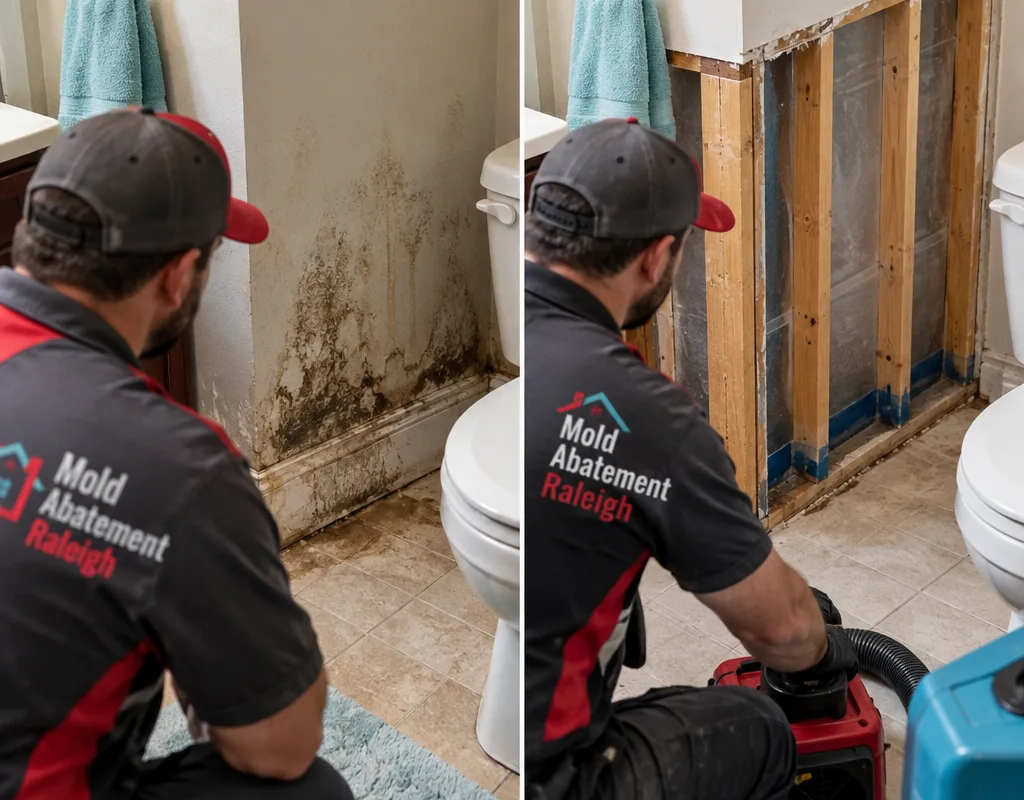
We remove unsalvageable porous materials when necessary, clean remaining surfaces with HEPA vacuuming and appropriate cleaners, and dry the structure so the area is ready for repair.
We walk the work with you, document what was addressed, and outline practical next steps such as fixing leaks, improving ventilation, managing crawl space moisture, or correcting HVAC drainage.
Planning the remediation
Mold remediation in Raleigh typically ranges from about $1,000 to $6,000+, with small, contained areas often nearer the low end and larger or multi-area projects costing more. If demolition and rebuild are needed, the budget usually increases.
Final price depends on the size of the affected area, how accessible it is, the materials impacted, containment complexity, and how much drying is required. The exact scope and cost are confirmed after an on-site inspection.
Controlled work in real homes
Questions that protect your home
Mold work is easy to do poorly and hard to verify after the fact, so the questions you ask matter.
Ask who will be in the home and what protection they use. A professional should be comfortable explaining PPE, containment, and why HEPA filtration is used during removal and cleanup. Ask how they decide what gets removed versus cleaned. In many cases, porous materials that are contaminated need removal, while framing and other non-porous or semi-porous materials may be cleaned and treated.
Ask how moisture will be addressed. If a leak is active, remediation cannot succeed until it is repaired. If the issue is condensation, the plan may include ventilation changes or HVAC drainage corrections. If the issue is a damp crawl space, the plan should discuss controlling ground moisture and air movement.
Finally, ask what documentation you will receive. A written scope and clear notes about affected areas help you coordinate any rebuild work and keep the project organized. If you are also managing water damage from a recent event, water damage restoration often overlaps with mold prevention because drying and moisture control are the difference between a clean repair and a recurring problem.
Straight answers
Understand timing, access, cleanup methods, crawl space work, and the factors that shape a remediation scope.
Most mold remediation jobs take 1 to 5 days, depending on how many areas are affected and how much drying is needed. A small, contained spot with no structural drying can sometimes be addressed quickly, while crawl space work, attic work, or projects that require removal of drywall and insulation usually take longer because drying and cleaning must be completed before repairs.
Often you can stay home if the affected area can be fully contained and access can be controlled, but it depends on the location and the occupant's sensitivity. If remediation is in a main living area, or if someone has asthma or other sensitivities, it may be more comfortable to be out of the home during the most active removal and cleaning.
Yes, crawl space mold remediation can reduce odors and improve indoor air quality when the moisture source is controlled. The key is cleaning impacted framing and surfaces, then addressing the conditions that keep the crawl space damp, such as ground moisture, standing water, or humid air moving up into the home.
Bleach can discolor surface growth, but it is not a reliable mold remediation method for porous materials like drywall and some woods. Professional remediation focuses on physically removing contaminated porous materials when needed, HEPA vacuuming and cleaning remaining surfaces, and drying the structure so mold cannot keep growing.
The biggest cost drivers are the size of the affected area, how hard it is to access, whether demolition is required, and how much drying equipment must run. Projects involving hidden growth behind cabinets or inside wall cavities often cost more because confirming and reaching the affected materials takes more labor and containment.
Yes, remediation commonly follows roof leaks, window leaks, and plumbing leaks once the water source is fixed. If the leak is recent, early drying and moisture control can prevent mold from spreading, so it is worth scheduling an inspection quickly even if the damage looks minor.
Tell us what you are seeing—odor, staining, a recent leak, or a damp crawl space—and we will inspect the area, explain the findings, and outline next steps for safe cleanup and prevention.