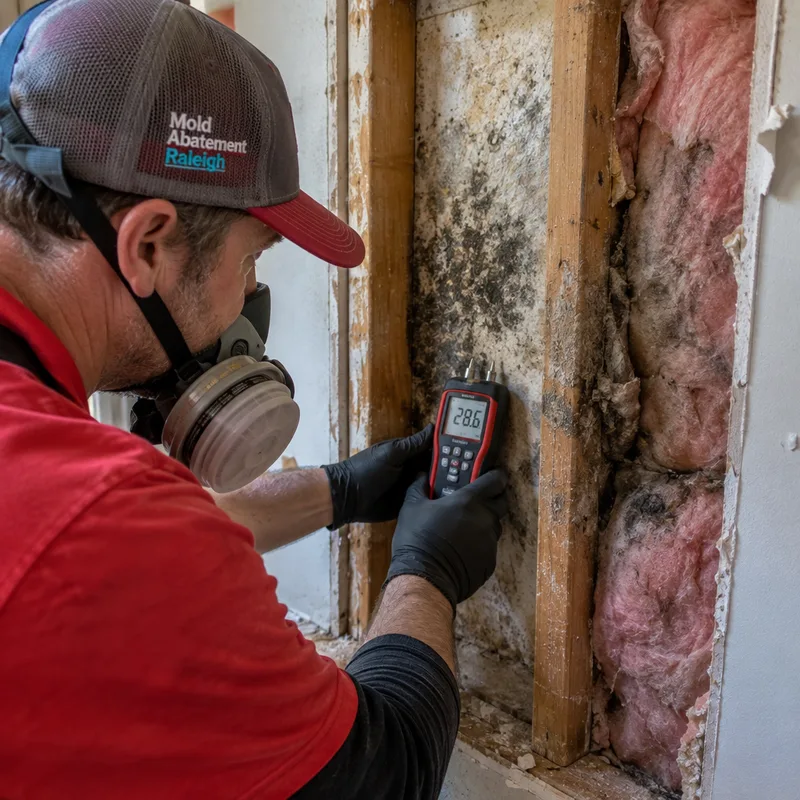
Source and moisture identification
Mold removal starts with locating the moisture that feeds growth: active leaks, condensation, poor ventilation, or elevated humidity. Removing visible mold without fixing moisture usually leads to regrowth.
Serving Raleigh, North Carolina & surrounding areas
Mon–Fri 8am–6pm · Sat 9am–2pm
Mold removal in Raleigh, NC
If you see staining, smell musty odors, or have had a leak, we can inspect, contain, and remediate mold with a clear scope and safe work practices that protect your home and indoor air.
Inspection, moisture diagnosis, containment, controlled removal, cleaning, and verification belong in one coordinated remediation plan.
Contain the problem at its source
Searching for mold removal Raleigh usually means you need two things fast: confirmation of what is growing and a plan that stops it from spreading. Mold Abatement Raleigh handles the full remediation workflow, including inspection, moisture diagnosis, containment, removal of affected materials when necessary, cleaning, and post-remediation verification steps.
Raleigh homes commonly see mold after roof leaks, plumbing failures, HVAC condensate issues, or crawlspace moisture. In neighborhoods with older housing stock such as Five Points, you may be dealing with past repairs and layered building materials that hide growth behind plaster, lath, or multiple paint coats. In newer builds around Brier Creek, the pattern is often localized and tied to a specific leak, builder punch-list item, or poorly draining condensate line. Basement-style foundations are less common here, so crawlspaces and wall cavities tend to be the areas that need careful access and controlled removal.
You will work with a mold remediation team that explains what we found, what we will remove versus clean in place, how we will protect occupied areas, and what needs to happen after remediation so the problem does not come right back. We operate as a mold abatement company Raleigh homeowners rely on when the priority is doing the messy part safely and leaving the property ready for repairs and normal use.
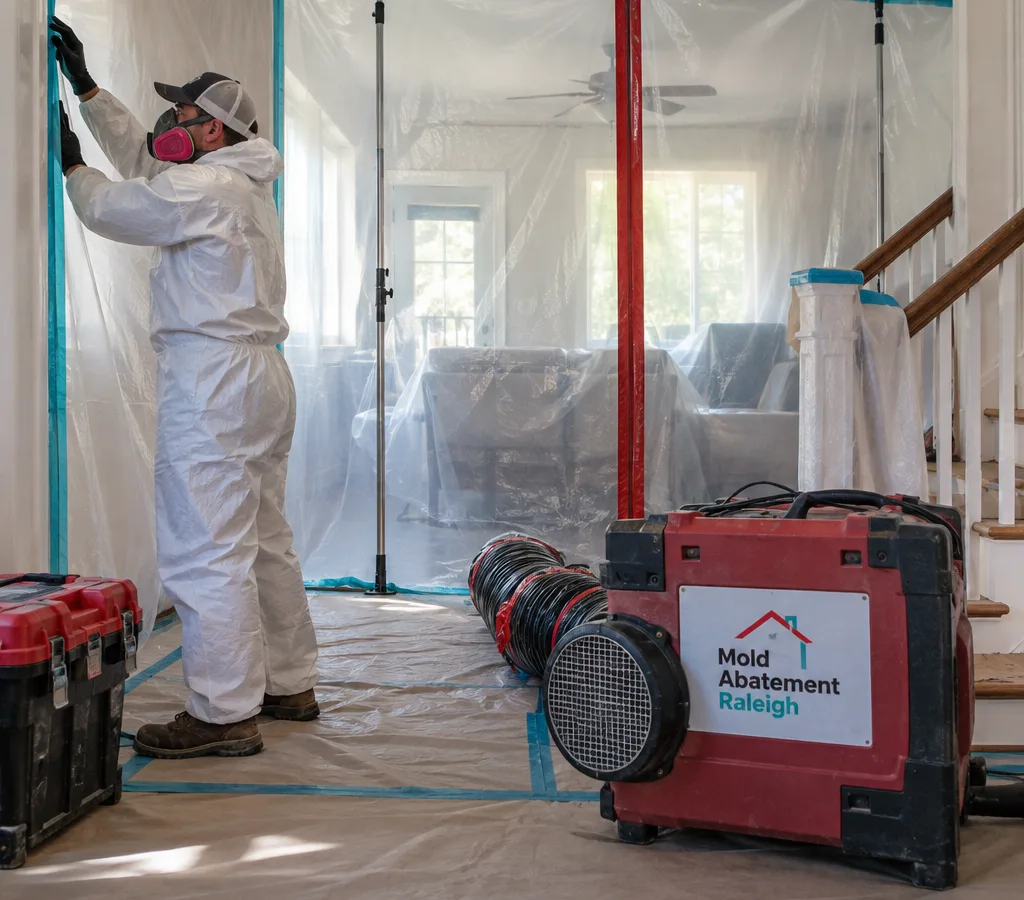
Controlled remediation
Mold removal starts with locating the moisture that feeds growth: active leaks, condensation, poor ventilation, or elevated humidity. Removing visible mold without fixing moisture usually leads to regrowth.
We isolate the work area with plastic sheeting and use negative air machines with HEPA filtration so disturbed spores do not migrate into bedrooms, hallways, or HVAC returns.
HEPA vacuums and damp-wipe methods keep fine particulate from becoming airborne during demolition, cleaning, and final detailing.
Drywall, insulation, baseboards, carpet pad, or other porous materials may need removal if they are contaminated. We explain what gets removed and where the cut lines will be.
Non-porous and semi-porous surfaces are cleaned using appropriate chemistry for the substrate, followed by controlled application where it is warranted for the conditions found.
We keep the work organized for insurance and property records and leave the area ready for a repair contractor or restoration crew to rebuild finishes.
Find hidden moisture and growth
Mold is often discovered where air is still and moisture lingers, not where it is easiest to see. Bathrooms with weak exhaust fans, laundry rooms with slow leaks, and HVAC closets are common problem spots. Wall cavities can hold growth after a supply line leak, and the staining may only show up weeks later.
Crawlspaces are a frequent driver in Raleigh because humid air and ground moisture can raise moisture content in joists and subflooring. If the home sits on a lot with poor drainage, you may see recurring dampness near foundation vents and piers. We look for visible growth, but we also look for conditions that support it: wet insulation, deteriorated vapor barrier, condensation on ductwork, and air pathways that pull crawlspace air into living spaces.
If you are dealing with a real estate transaction or a tenant complaint, we can also coordinate around access windows and provide a written scope that is straightforward for owners, managers, and adjusters to follow.
From inspection to verification
We inspect the affected area, identify likely moisture sources, and define the boundaries of impacted materials. When appropriate, we recommend third-party testing or coordinate with an existing report.
We protect floors and pathways, build containment with critical barriers, and set negative air with HEPA filtration. This step is what keeps the rest of the home clean during removal.
Contaminated porous materials are removed and bagged for disposal. Remaining structural surfaces are cleaned using HEPA methods and surface-appropriate products, with careful attention to framing, sheathing, and fasteners.
If materials are wet, drying is addressed so the area can return to normal moisture levels. We also flag repairs needed to prevent recurrence, such as plumbing fixes, ventilation upgrades, or crawlspace corrections.
We perform a detailed final clean and can support clearance testing when a third party is involved. The goal is a dry, clean work area that is ready for reconstruction.
Plan the remediation scope
Mold removal in Raleigh typically ranges from about $1,500 to $6,500 for many residential projects, with small, contained areas sometimes closer to $900 to $2,000 and larger, multi-room or crawlspace jobs reaching $8,000+ depending on access and rebuild needs. Price is mainly driven by the size of the affected area, how much porous material must be removed, containment complexity, drying requirements, and whether the HVAC system or crawlspace is involved. The exact cost is confirmed after an on-site inspection and a written scope.
Book Your Free Inspection“They explained what was actually contaminated versus what could be cleaned, built a tight containment, and kept dust and odor out of the rest of the house. The scope was clear, and the space was ready for repairs when they finished.”
“We had mold show up after a slow plumbing leak. The crew found the wet insulation behind the wall, removed what needed to go, and documented everything for our records. The process was organized and professional.”
Start with a written plan
If you suspect mold after a leak, humidity problem, or recent water damage, the next step is an inspection and a written remediation plan so you know exactly what will be contained, removed, cleaned, and dried.
Straight answers before work begins
Understand timing, containment, material removal, occupied-home precautions, and documentation before remediation begins.
Start time depends on crew availability and the type of containment needed, but urgent situations like active leaks or visible growth in living areas are typically prioritized. After an inspection, we can outline the earliest start window and what you can do immediately (such as limiting HVAC use in the affected zone) to reduce spread risk.
Professional remediation focuses on physical removal and cleaning, not masking. Porous materials that cannot be reliably cleaned (like contaminated drywall or insulation) are typically removed, while structural framing and other suitable surfaces are cleaned using HEPA methods and appropriate products for the material.
Only if those materials are contaminated or cannot be dried and cleaned to an acceptable condition. We define cut lines based on visible impact, moisture readings, and how materials are layered, then explain what will be removed versus what can remain and be cleaned.
It can be, when containment and negative air are used correctly and the work area is isolated from occupied spaces. We discuss who should avoid the area, how we protect pathways, and whether temporary relocation makes sense for sensitive occupants or large, multi-area projects.
Yes, crawlspaces are a common remediation area locally because humidity and ground moisture can affect subflooring and framing. The scope may include containment, removal of contaminated insulation, cleaning of framing, and guidance on moisture control steps such as vapor barrier condition, drainage issues, and ventilation strategy.
Yes, we can provide a written scope and documentation that helps owners, managers, and adjusters understand what was impacted and what remediation steps were performed. Approval and coverage depend on the policy and the cause of loss, so we keep the remediation details clear and itemized.
Tell us what you are seeing and where it is showing up. We will schedule an inspection, explain the containment and remediation steps, and provide a written scope you can act on.