Musty odor with no obvious source
Odor often points to hidden moisture in a wall cavity, around a window, under flooring, or in a crawlspace. Testing is most useful when paired with moisture mapping so the inspection targets the likely source.
Serving Raleigh, North Carolina & surrounding areas
Mon–Fri 8am–6pm · Sat 9am–2pm
Mold testing in Raleigh, NC
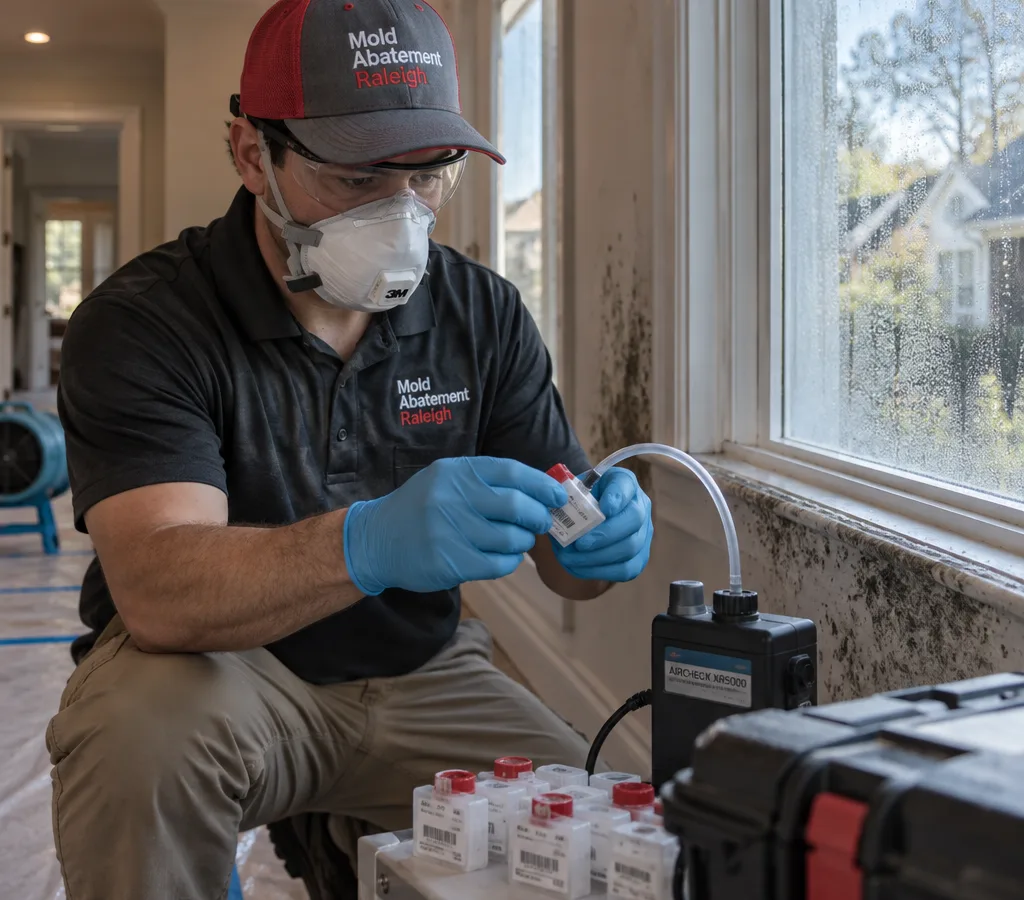
Get clear answers fast when you suspect mold. Our certified inspectors collect proper samples, document conditions, and deliver an easy-to-read report with practical next steps for your Raleigh home.
Observation, moisture evaluation, appropriate sampling, and clear documentation belong in one coordinated inspection.
Answers grounded in conditions
If you are searching for mold testing Raleigh residents can rely on, you are usually trying to answer two questions: “Is this mold?” and “What do we do next?” A good inspection does more than collect a sample. It connects symptoms and building conditions—humidity, ventilation, and leaks—to the right type of sampling and a report you can act on.
At Mold Abatement Raleigh, our inspectors treat mold testing as a field investigation. We start with what you are noticing—musty odor, staining, recent water issues, or allergy-like symptoms—then verify moisture conditions and choose the sampling strategy that actually fits the situation.
Raleigh’s warm, humid seasons and frequent indoor cooling can create condensation issues around supply vents, exterior walls, and crawlspaces. Homes with crawlspace vents, older ductwork, or uneven insulation are especially prone to hidden moisture that does not show up until odor or discoloration appears.
Our team works as an experienced mold abatement team in Raleigh, NC, so we write reports with real-world next steps in mind: what areas to dry, what to monitor, and when further action is warranted.
Inspection and documentation
A reliable mold testing visit combines observation, moisture evaluation, and defensible documentation. Here is what you should expect from our mold testing in Raleigh, NC:
If you are dealing with a recent water event—an overflow, roof leak, or plumbing leak—timing matters. Testing too early or without moisture context can miss what is developing behind finishes. We will explain when sampling is useful now versus when drying and follow-up verification makes more sense.
Know when testing helps
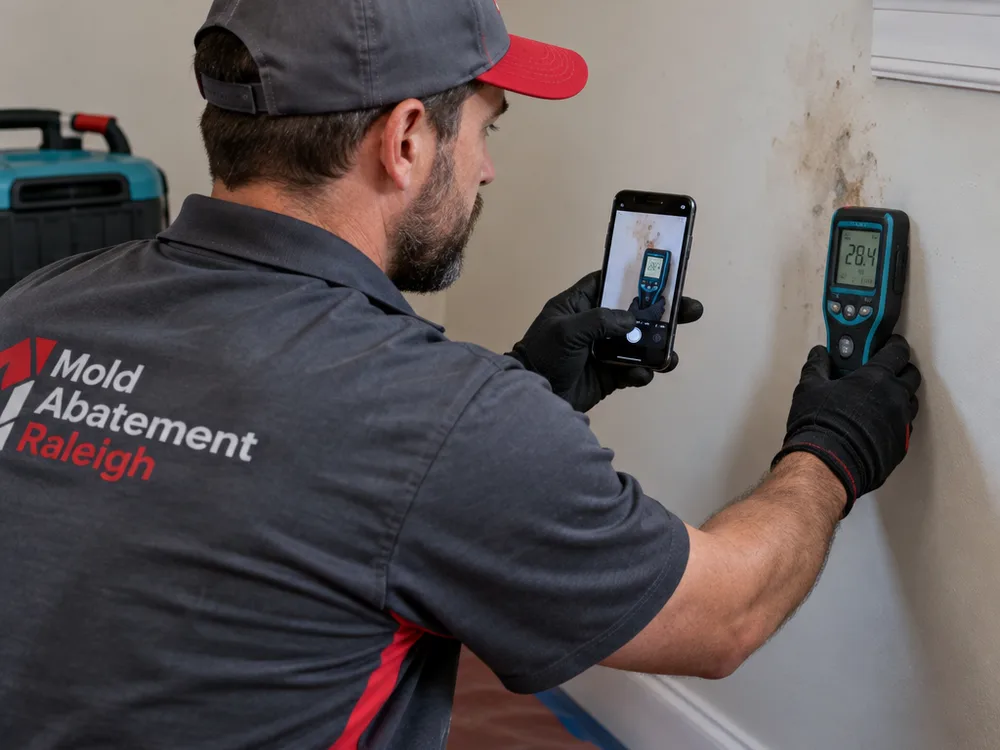
Odor often points to hidden moisture in a wall cavity, around a window, under flooring, or in a crawlspace. Testing is most useful when paired with moisture mapping so the inspection targets the likely source.
Not every dark spot is mold, and not every mold-like patch means the same response. We document the location, material, and moisture driver so you can decide on cleaning, repairs, or further investigation.
If materials stayed wet long enough, mold can start in concealed spaces. We focus on the wetting history, what dried, what did not, and whether additional opening or targeted sampling is justified.
A focused inspection helps clarify risk areas like bathrooms, laundry rooms, attic access points, and crawlspaces. The goal is straightforward documentation for negotiations and planning.
When someone in the home is reacting, the inspection should be careful and specific. We avoid blanket statements and instead provide findings tied to areas and conditions you can control.
From intake to written findings
We ask a few practical questions about what you are seeing, any recent water issues, and which rooms are involved. This helps us bring the right equipment and set expectations for sampling.
We walk the affected areas with you, check likely moisture routes, and take readings where appropriate. In Raleigh, we often pay close attention to crawlspace conditions, bathroom ventilation, and condensation around HVAC registers.
If sampling will change decisions, we collect the right type: air samples to compare indoor levels to a baseline, and surface samples to document what is on a specific material. We label, document, and handle samples for lab analysis.
You receive a written report that explains what was found, where it was found, and what it means in practical terms. We also outline reasonable next steps, including moisture control recommendations and whether follow-up verification is warranted.
Planning the inspection
Mold testing in Raleigh typically ranges from about $250 to $750+, depending on the size of the home, the number of areas to inspect, and how many samples are needed. A simple single-area inspection with limited sampling is usually on the lower end, while multi-level homes, crawlspace concerns, or multiple indoor air and surface samples increase cost.
Your final price depends on access to the attic or crawlspace, how targeted versus widespread the concern is, and whether prior water damage needs more time on-site for moisture mapping and documentation. Exact pricing is confirmed after we understand your situation and the inspection scope.
Local building conditions
Mold problems are often building-specific, so we adapt the inspection to the way homes are commonly built in different parts of Raleigh.
Book Your Free InspectionOlder homes can have layered renovations over time. We pay attention to older window assemblies, additions tied into original framing, and any history of roof or plumbing updates that can leave concealed moisture paths.
Homes and condos often rely heavily on central HVAC and tighter building envelopes. We look closely at condensation patterns, bathroom exhaust performance, and signs of moisture around supply vents or exterior corners.
Crawlspaces are common in the area. That makes subfloor moisture, duct condensation, and insulation contact with damp surfaces important parts of the mold testing conversation.
We factor in where water shows up first: around windows and doors, roof penetrations, and transitions where flashing and sealants fail. A sample alone does not solve that; locating the moisture driver is what prevents repeat problems.
“We had a musty smell that kept coming back. The inspection was thorough, and the report made it clear the issue was moisture in the crawlspace, not just one spot on a wall.”
“I appreciated that they explained when testing made sense and when it didn't. The sampling and documentation were straightforward, and the results were easy to understand.”
“We needed mold testing quickly after a leak. They got us scheduled fast and walked us through what to dry, what to watch, and what the lab results meant for our next steps.”
Straight answers
Understand when testing is useful, what sampling can show, and how to prepare for an inspection.
Not always; if growth is visible and the moisture source is obvious, the priority is stopping the moisture and deciding on the correct level of cleaning or removal. Mold testing is most useful when you need documentation, when you suspect hidden growth, when symptoms persist without visible signs, or when you want to compare indoor air conditions to a baseline.
Most mold testing appointments take about 60 to 120 minutes, depending on how many rooms are involved, whether a crawlspace or attic is accessible, and how much moisture mapping is needed. If sampling is collected, we also spend time on labeling, documentation, and explaining what the samples can and cannot tell you.
Air sampling looks at what is suspended in the air at the time of testing, which can help compare indoor conditions to an outdoor baseline. Surface sampling documents what is on a specific material at a specific location. The right choice depends on your goal: source confirmation, documentation, or evaluating whether a space is being affected broadly.
Yes; crawlspaces are a common place for moisture issues in this area, and they can affect the living space through air movement and ductwork. When we inspect a crawlspace, we focus on visible conditions, humidity and moisture indicators, and targeted sampling when it helps confirm what is present and where it is coming from.
A mold report can document what was found and help guide practical next steps, but it does not function as a medical clearance. We explain results in context: the locations sampled, the moisture conditions observed, and what changes are likely to reduce risk moving forward.
In most cases, no; mold testing is non-destructive and does not typically disturb materials. If you have severe sensitivities or there is active demolition or heavy disturbance happening at the same time, we will advise you on the safest way to proceed and whether to schedule testing before or after certain work.
Schedule as soon as you can document the problem and start proper drying, but understand that meaningful results depend on conditions. If materials are still wet, the most urgent step is drying and moisture control; we can help determine when sampling will best answer whether mold growth has developed or is likely to develop in hidden areas.
Tell us what you are seeing and where it is happening. We will schedule a Raleigh inspection, explain the sampling options, and provide a clear written report with practical next steps.